Facebook comments and Messenger inquiries can mix routine questions with decisions that need a photographer, studio manager, or contest organizer. After a regatta or when an award submission window opens, messages may range from simple deadline questions to commercial licensing or attribution concerns. A structured triage process helps the team answer stable questions while reserving artistic, rights, and complaint decisions for a person.
The practical goal is to separate routine questions from higher-stakes conversations. Questions about print sizing or published contest rules can use reviewed reference material. Negotiating usage rights, discussing creative direction, handling a dispute, or collecting sensitive information should move to the organization’s approved human-led process. This keeps social messaging useful without treating it as the place to finalize every decision.
A Practical Messenger Inquiry Workflow for Photography Studios and Contests
Managing questions about sailing photo awards, print availability, and session bookings benefits from a documented process. Straightforward questions can use current, reviewed reference material, while usage rights, exclusive licensing, creative direction, and complaints go to qualified staff. The workflow should make that boundary visible to everyone who monitors the inbox. For confirmed session inquiries, appointment reminder templates can help the studio keep the next step visible while rights, availability, and payment questions remain with the appropriate person.
Triaging Inquiries: Safe, Verify-First, and Human-Only
To effectively route messages and optimize response time, it is crucial to categorize them based on complexity and information sensitivity. The following table outlines how photography and contest inquiries should be evaluated to minimize operational risk and maximize efficiency.
| Category | Description | Example Inquiries | Routing Action |
|---|---|---|---|
| Safe-to-Answer | Publicly available, stable information requiring no specialized verification. | Contest deadlines, gallery hours, standard print sizes, entry fees. | Provide immediate responses utilizing pre-approved saved replies or reviewed drafted templates. |
| Verify-First | Questions requiring basic qualification or checking studio records. | Checking if an image is available for non-exclusive licensing, verifying receipt of a contest entry, confirming portrait session availability. | Gather preliminary details to qualify the lead, then route to scheduling staff. |
| Human-Only | Complex, sensitive discussions involving nuanced artistic decisions, legal rights, or urgent operational matters. | Exclusive commercial licensing negotiations, model release disputes, formal complaints regarding contest judging. | Immediate handoff to senior photographers. These inquiries must never be finalized in the initial chat triage. |
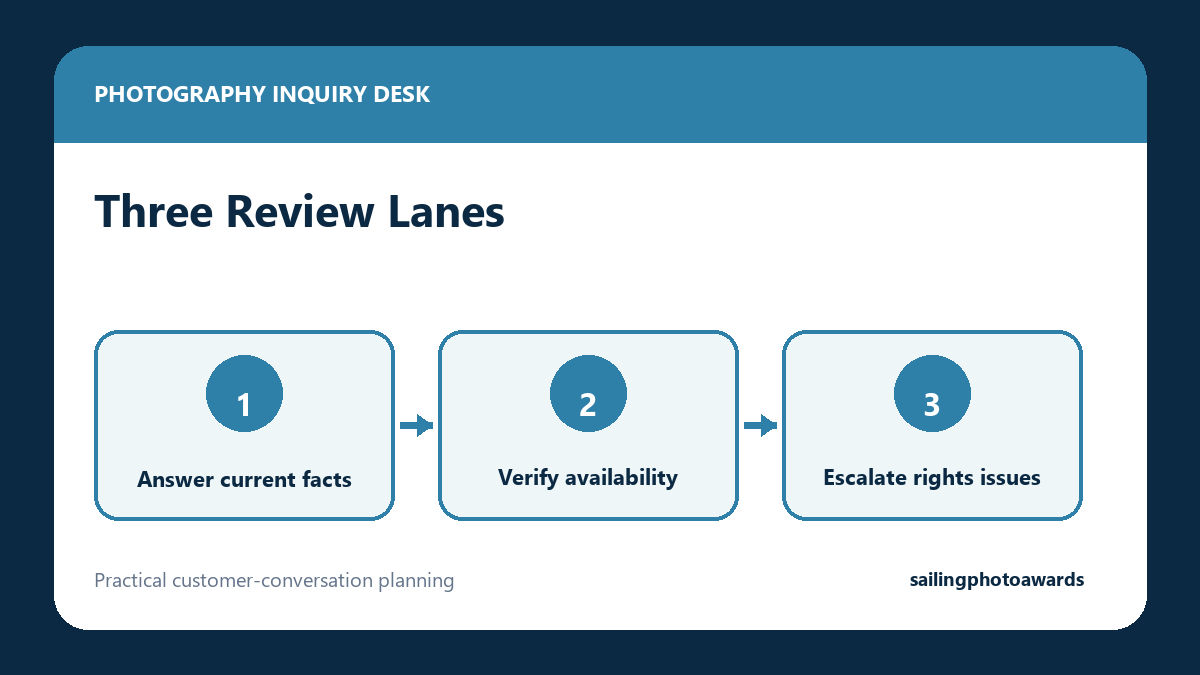
Assign an owner to every fact used in a routine response. Contest deadlines may belong to the awards coordinator, licensing availability to the studio manager, and session openings to the booking calendar owner. Record when each fact was last checked and what should happen when it expires. If an entry fee, deadline, availability window, or usage term cannot be verified from the current source, the workflow should stop the prepared answer and ask a person to review it. This content-ownership step reduces the chance that an old template looks authoritative after the underlying information changes.
Keep the first reply narrow. It should identify the inquiry type, provide only a currently reviewed fact when one is available, and explain the next step. Avoid asking a photographer, model, entrant, or buyer to repeat private details merely to qualify the conversation. For a rights or complaint question, acknowledge receipt and identify the person or process that will review it without predicting an outcome. For a scheduling question, confirm which dates or service type the team needs to check, but do not present availability until the current calendar has been reviewed.
Structuring Communication Channels
One option to evaluate is a structured Messenger comment and DM workflow. Review the product against capabilities you can verify, including comment and DM capture, customer-conversation workflows, lead qualification, BYOK (Bring Your Own Key) AI reply drafts, and human review controls. Preserve human review before any AI-assisted reply reaches a customer so the team can check tone, facts, rights questions, and possible commitments.
Maintaining Security and Privacy
Set clear limits on what the team collects during initial chat. Keep payment details, identity documents, signed model releases, health information, and other sensitive material out of routine social messages. When an inquiry moves toward a booking, license, or formal agreement, use the studio’s reviewed business process and seek appropriate advice where needed. Teams setting a basic first response can review Meta’s automated greeting instructions; broader data and rights practices should be reviewed separately.
Numbered Implementation Sequence
Establishing a process for handling inquiries requires methodical execution. Follow this sequence to integrate a structured triage system.
- Audit communication channels to identify common questions received during peak contest seasons.
- Define categorization rules for safe-to-answer, verify-first, and human-only inquiries based on the audit.
- Draft standard response templates for safe-to-answer categories, matching your studio’s brand voice.
- Establish secure, off-platform procedures for handling payments and formal contract signatures outside the chat.
- Configure your management dashboard to capture incoming comments and direct messages, applying lead qualification sorting.
- Implement a mandatory review step where human staff approve drafted responses before dispatching to clients.
- Conduct a training session focusing on escalation paths for complex rights negotiations.
- Launch the workflow during a low-traffic period, monitoring routing accuracy for two weeks.
- Review metrics after one month, adjusting rules based on staff feedback and response times.
Staff Handoff Checklist
Smooth transitions between frontline triage and specialized staff help preserve context. Use this checklist as a starting point.
- Verify the client’s request is accurately summarized, distinguishing between commercial licenses and personal prints.
- Confirm specific image reference numbers or contest entry codes are noted for the specialist.
- Review the chat history to ensure no sensitive financial or identity data was provided.
- Note the urgency of the request, highlighting impending publication deadlines or closing contest windows.
- Identify the appropriate specialist for the handoff based on the inquiry type.
- Provide an internal note explaining context uncovered during the initial lead qualification phase.
- Draft a message notifying the client they are being transferred to a specialist.
Measurement Guidance
For booked photography sessions, keep attendance counts separate from inquiry-response measures; the no-show rate calculation guide from another site under common ownership explains how to reconcile cancellations, reschedules, attended appointments and no-shows before choosing a denominator.
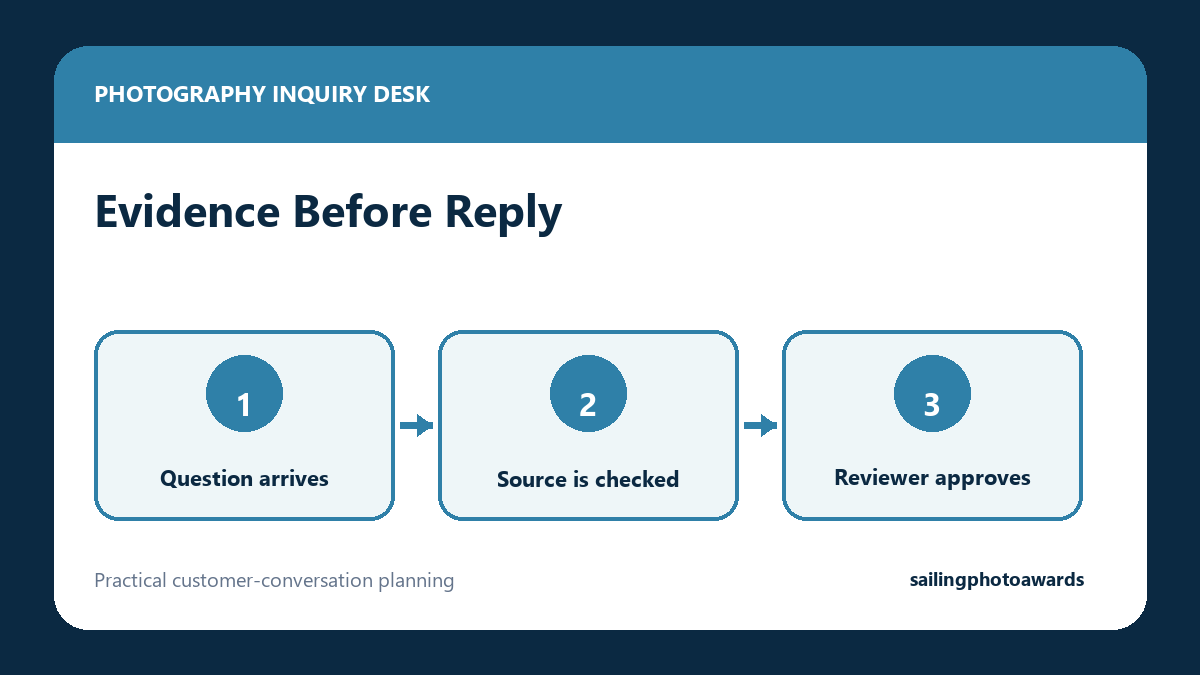
Evaluate the process with a few observable measures. Track time to acknowledgment, the volume of human-only conversations, and whether the initial category matched the final disposition after staff review. Measure handoffs that reach the right specialist without making the client repeat the basic context. For AI-drafted templates, record how often reviewers make factual corrections, request more evidence, or reject a draft. These measures help the team refine its rules without assuming that speed alone improves the client experience. The review habit has parallels with our guide to managing AI illustration in editorial workflows.
Frequently Asked Questions
How should we handle a user sending a signed model release via Messenger?
Do not copy the document into another message or staff note. Explain that signed releases are handled through the studio’s approved document process, and direct the sender there. The organization should define that process with appropriate privacy and legal advice.
What is the procedure when a client asks for banking details?
Do not request or exchange card or banking details in routine social messages. Direct the client to the studio’s approved invoice or payment process and verify the destination independently before sending anything.
Why is a mandatory human review step necessary for drafted responses?
Human review lets the team check whether a draft matches current rules, avoids accidental promises, and routes rights questions to an appropriate decision-maker. It is an operational check, not a substitute for professional advice.
How do we route urgent complaints regarding improper image attribution?
Classify attribution disputes as human-only inquiries. Frontline staff can acknowledge receipt without deciding the issue, preserve the relevant context, and route the matter to the studio’s designated decision-maker or adviser.
Next-Step Checklist
To finalize your secure inquiry management process, complete these final action items to ensure your organization is prepared.
- Document the complete triage criteria and ensure it is accessible to all team members.
- Verify the functionality of links to secure external portals used for processing payments.
- Test the comment and DM capture functionality of your system using internal dummy accounts.
- Verify through audits that mandatory human review settings are enforced for drafted responses.
- Review pre-written response templates for requests involving sensitive or unnecessary data.
- Assign primary and designated backup personnel for handling escalated human-only inquiries across time zones.
- Schedule a quarterly review meeting to analyze categorization rules and adapt routing logic.




0 Comments